

Industries / Robotics
Robotics operations need software shaped around the work.
Robotics companies coordinate requirements, cells, controls, dependencies, site conditions, commissioning evidence, and service responsibilities across teams.
Industry focus
Robotics workflows
Most robotics delivery problems trace back to an assumption that was true when it was written down and stopped being true before commissioning. These views keep assumptions attached to the work.
Application-to-design handoff
Carry the intended application, assumptions, interfaces, open technical decisions, and responsible reviewer into design work.
- Assumptions travel with the design rather than staying in the proposal that created them
- Open technical decisions named as open, with the reviewer who owns each one
- Interfaces documented before they become an integration surprise
Commissioning readiness
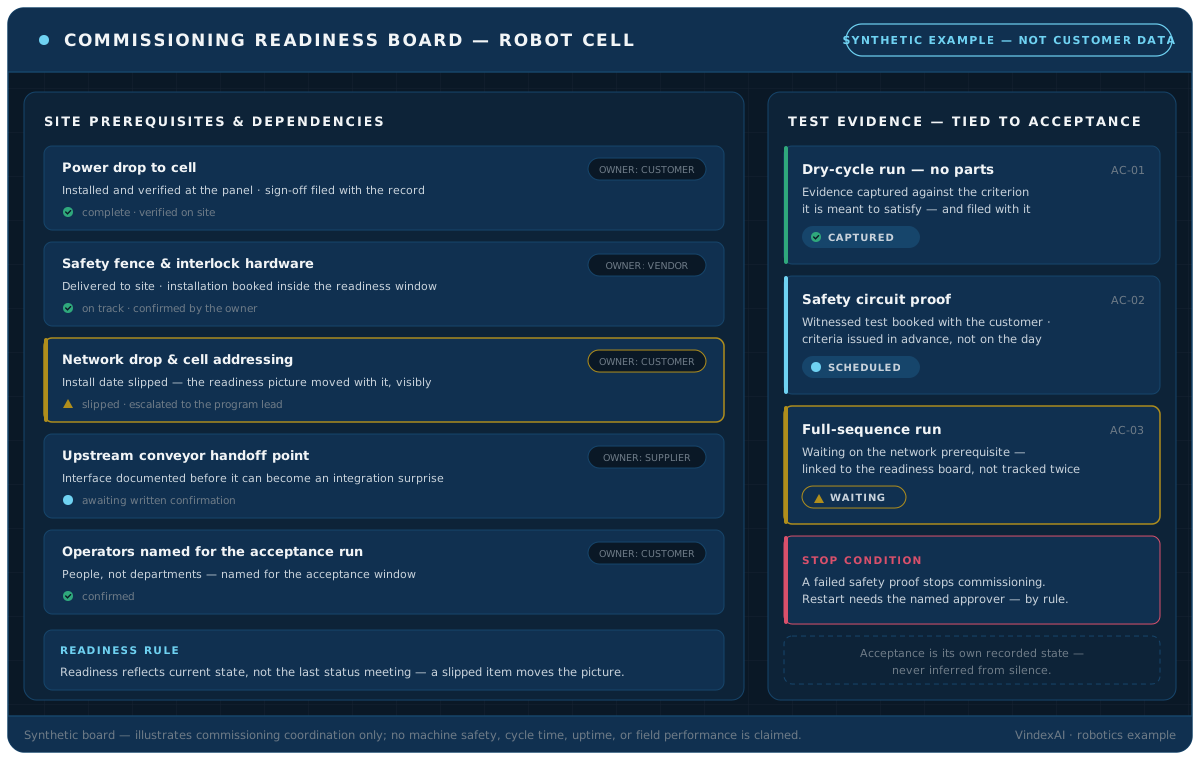
Bring site prerequisites, dependencies, test evidence, open exceptions, and acceptance actions into a current readiness view.
- Site prerequisites owned by others tracked as dependencies, not as internal tasks
- Test evidence gathered against the acceptance criteria it is meant to satisfy
- Readiness reflects current state rather than the last status meeting
- A slipped prerequisite moves the readiness picture visibly, so nobody discovers it at mobilization
Installed-system service
Connect reported behavior, configuration context, diagnosis evidence, owner, countermeasure, and verified follow-through.
- Reported behavior kept alongside the configuration it occurred under
- Countermeasures verified rather than assumed effective once applied
- Recurring faults become visible as patterns across the installed base
How we serve the industry
Robotics controls, Buyer questions, and Proof boundary
Stop conditions and technical approval are treated as first-class operating structure here, not as project-management overhead.
Operating controls
Keep technical approval, change authority, test responsibility, customer acceptance, and stop conditions explicit at each handoff.
- Stop conditions written into the workflow, so stopping work is a control rather than an escalation failure
- Technical approval separated from schedule pressure by naming the approver and the criteria
- Customer acceptance modelled as its own state, never inferred from silence
Buyer questions
Which interface is ambiguous, what blocks commissioning, who owns the next technical decision, and what evidence closes the issue?
- The questions locate where assumptions die between proposal and commissioning
- The answers scope a bounded first view — one cell, one project, one service loop
Proof boundary
Synthetic system-delivery views demonstrate coordination only; they do not assert machine safety, cycle time, uptime, or field performance.
- Machine safety and field performance remain with the builder's own validation and acceptance process
- No cycle-time or uptime figure appears without customer-released measurement