

Industries / Engineering
Engineering operations need software shaped around the work.
Engineering operations need a visible path from request and requirement through analysis, review, decision, change, release, and retained evidence.
Industry focus
Engineering workflows
The expensive engineering failures are rarely analytical. They are decisions that were made well and then became impossible to reconstruct six months later.
Request-to-requirement
Turn a bounded request into explicit requirements, assumptions, interfaces, questions, ownership, and review state.
- Assumptions written down as assumptions rather than absorbed into requirements
- Unanswered questions tracked instead of resolved by whoever writes the spec
- Ownership and review state visible from the moment the request is accepted
Technical decision record
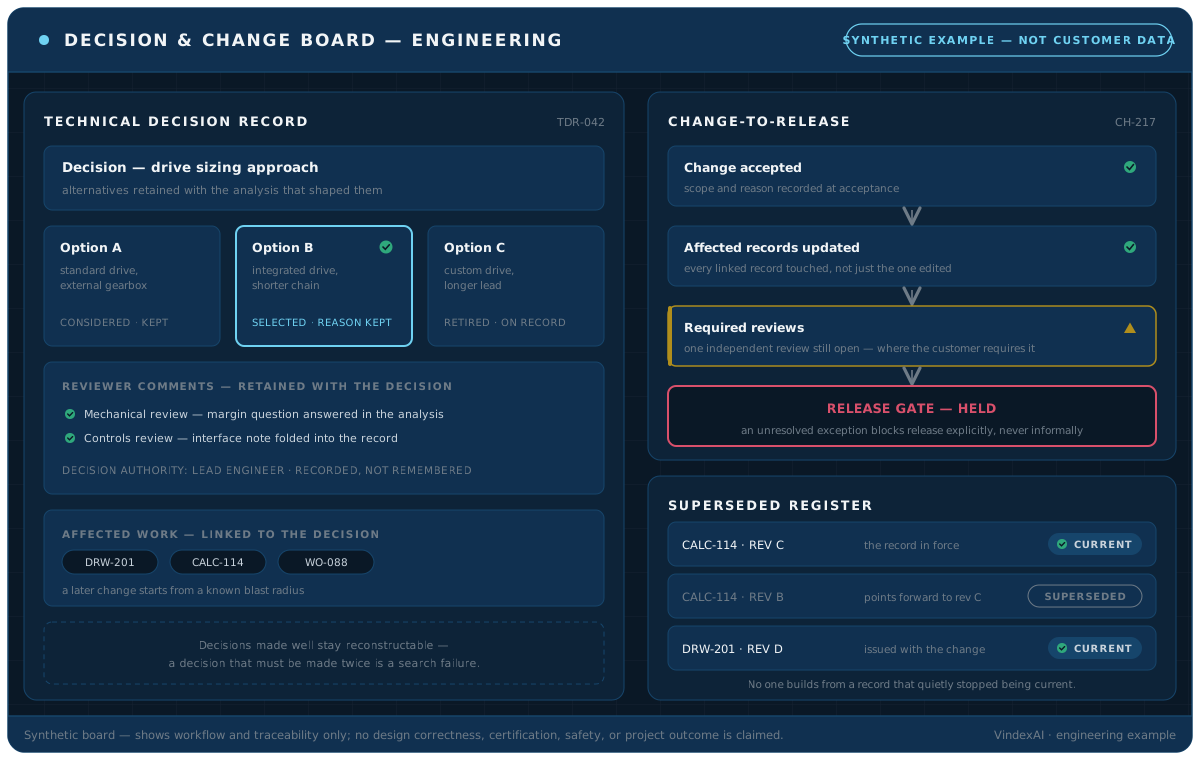
Connect alternatives, analysis, reviewer comments, decision authority, selected direction, and affected work.
- Alternatives considered are retained, not just the one selected
- Reviewer comments preserved alongside the decision they shaped
- The work affected by a decision is linked to it, so later change has a blast radius
- A decision that must be made twice is a search failure — the record exists so it is made once
Change-to-release
Carry an accepted change through affected records, required reviews, release readiness, distribution, and unresolved exceptions.
- Superseded records marked as superseded rather than silently replaced
- Unresolved exceptions block release explicitly instead of being carried informally
How we serve the industry
Engineering controls, Buyer questions, and Proof boundary
Authorship, review, approval, and superseded state are defined per customer, because engineering control conventions differ more between companies than most software assumes.
Operating controls
Define authorship, independent review where required by the customer, decision authority, change approval, release control, and superseded-state handling.
- Independent review modelled only where the customer's own control convention requires it
- Decision authority named per record type, because sign-off differs between calculations, drawings, and changes
- Superseded state is explicit, so no one builds from a record that quietly stopped being current
Buyer questions
Which decision lacks evidence, where is current state unclear, who may approve the change, and what must be true before release?
- The questions locate the decisions that would be expensive to reconstruct today
- The answers scope one workflow — request, decision, or change — before any system-wide commitment
Proof boundary
Synthetic engineering records show workflow and traceability without claiming design correctness, certification, safety, or project outcomes.
- Design correctness and certification remain the engineering organization's own responsibility
- The software claims reconstructable decisions, never correct ones