

Industries / Integrators
Integrators operations need software shaped around the work.
Integrators operate between customer, vendor, engineering, project, site, and commissioning teams where each dependency has a different owner.
Industry focus
Integrators workflows
An integrator's hardest problem is that most of the critical path belongs to someone else. Software that assumes single-company ownership makes that worse rather than better.
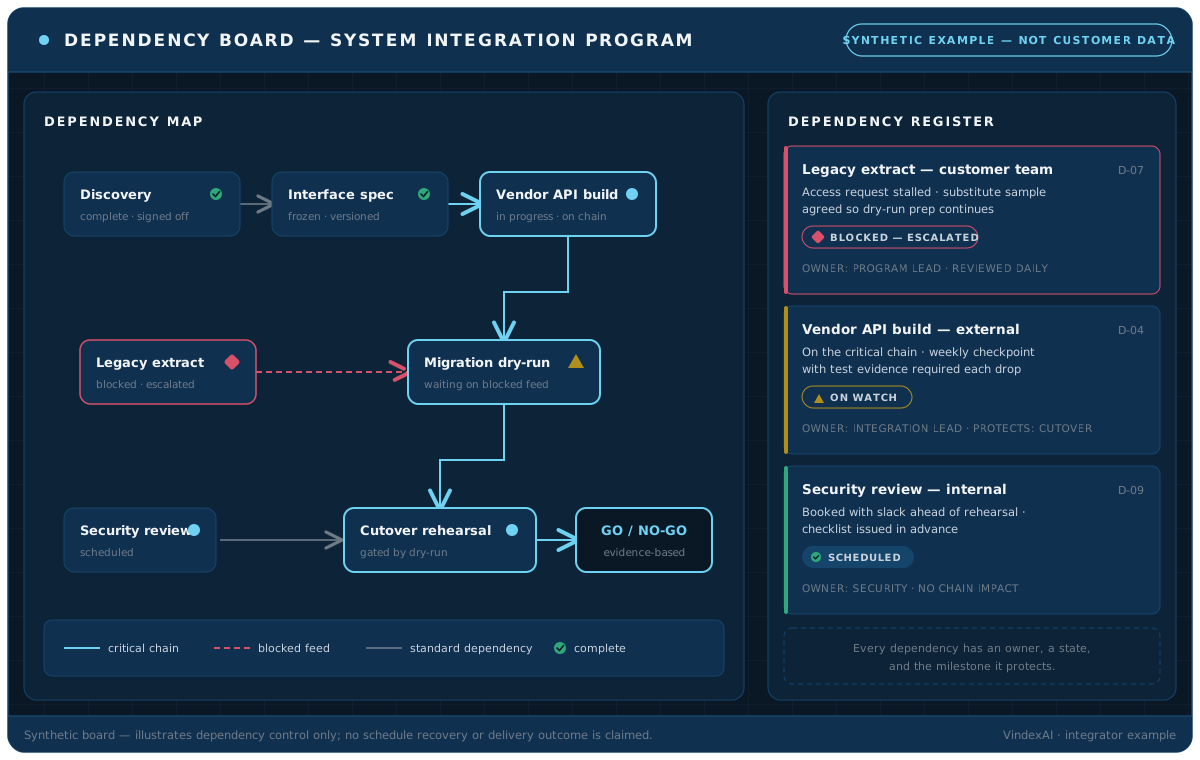
Dependency register
Connect customer inputs, vendor actions, technical prerequisites, due state, and escalation without flattening company ownership.
- Each dependency keeps the company that actually owns it
- Due state visible early enough for escalation to still matter
- Vendor and customer actions tracked with the same rigor as internal ones
Site-readiness coordination
Make access, utilities, upstream equipment, network, labor, permits supplied by others, and open decisions visible before mobilization.
- Mobilization decisions made against real readiness rather than reported readiness
- Items supplied by others tracked explicitly as external commitments
- Open decisions surfaced before crews are on site
Commissioning-to-closeout
Carry punch items, evidence, owner, acceptance action, documentation, and remaining commercial follow-through to closure.
- Punch items carry an owner and an acceptance action, not just a description
- Commercial follow-through closed alongside the technical work
How we serve the industry
Integrators controls, Buyer questions, and Proof boundary
Ownership crosses company lines here, so contractual authority and escalation are modelled alongside the technical work rather than separately from it.
Operating controls
Preserve contractual ownership, change approval, site authority, test responsibility, acceptance, and escalation across organization boundaries.
- Contractual ownership drawn from the actual agreements, not assumed from an org chart
- Escalation paths that cross company lines are agreed with the companies on the other side of them
- Acceptance authority stated per deliverable, because one project can carry several acceptors
Buyer questions
Which dependency belongs outside the project team, what input is late, who can accept a change, and what closes the handoff?
- The questions surface the dependencies that live outside the project team's authority
- The answers scope one project's dependency register before any multi-project rollout
Proof boundary
Synthetic integration projects illustrate dependency control without claiming schedule recovery, acceptance, safety, or commercial performance.
- The register demonstrates control of the critical chain; the outcomes belong to the project that earns them