

Industries / Healthcare
Healthcare operations need software shaped around the work.
Healthcare operating use cases are separate from the VindexAI Health platform. Discovery defines roles, information boundaries, and publishable evidence before any build.
Industry focus
Healthcare workflows
Every workflow below is administrative and operational rather than clinical. The boundary is drawn during discovery, before any build, and it governs what the software touches and what it never sees.
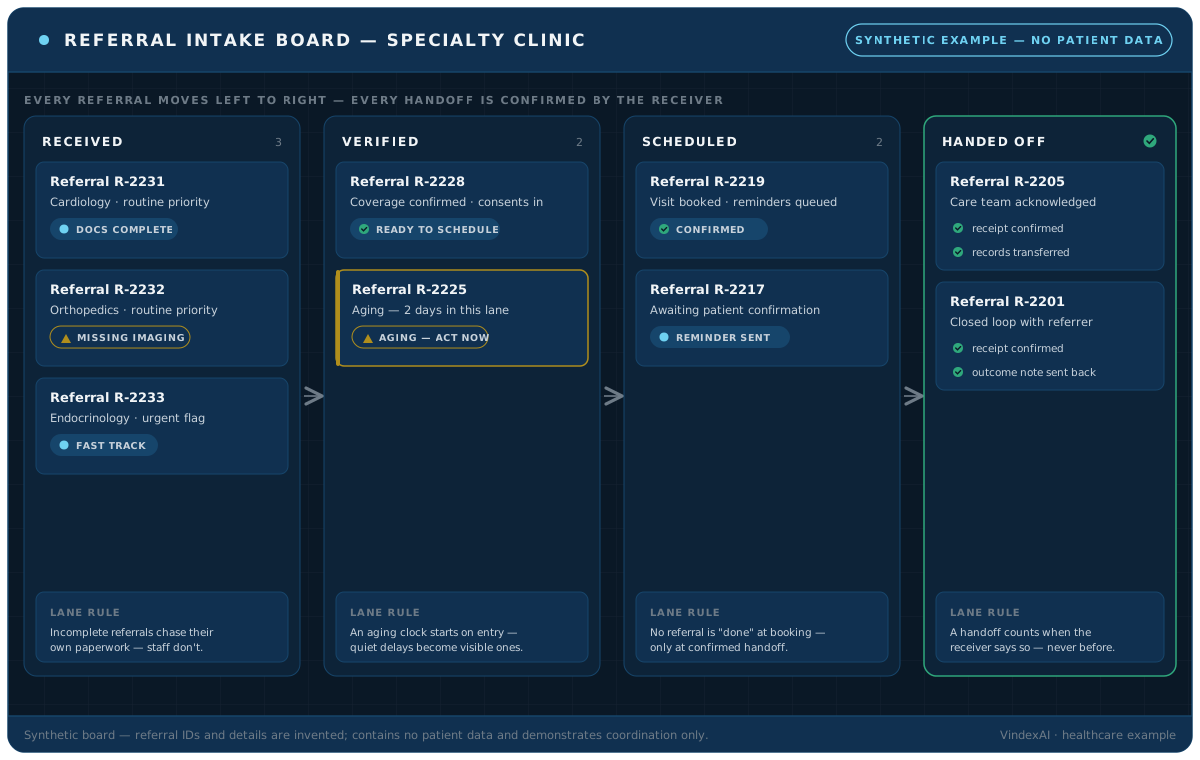
Referral and intake coordination
Track a bounded referral or intake handoff, responsible role, missing input, review state, and next action without placing protected detail in public proof.
- The handoff itself is tracked; the protected clinical content is not the subject of the view
- Missing inputs surface before the handoff stalls rather than after someone follows up
- Access scoped to the role that holds the responsibility
Operational readiness
Coordinate staffing inputs, equipment readiness, room or resource state, and escalation paths as an operating view rather than a clinical claim.
- Resource and readiness state kept current for the operators who schedule against it
- Escalation paths defined in advance instead of improvised during a shortfall
Administrative follow-through
Make non-clinical requests, document handoffs, approvals, and unresolved administrative work visible to authorized operators.
- Document handoffs and approvals carried to a recorded conclusion
- Unresolved administrative work stays visible rather than aging quietly
How we serve the industry
Healthcare controls, Buyer questions, and Proof boundary
Healthcare carries the tightest proof boundary of any line on this site, and it is stated before the engagement rather than negotiated afterwards.
Operating controls
Define minimum access, human review, stop conditions, retention expectations, and the customer's deployment boundary for the selected workflow.
- Minimum access defined per field, because a referral view and a clinical record are different exposures
- Stop conditions and human review agreed before go-live, not after an incident
Buyer questions
Which non-clinical handoff is failing, who may see each field, who decides, and what evidence can demonstrate improvement?
- Every question can be answered without disclosing protected information
- The answers define scope, access, and evidence before any proposal exists
Proof boundary
Public examples remain synthetic; no patient, tenant, customer, clinical-outcome, compliance, or safety claim is inferred from an operating demonstration.
- The boundary applies to sales conversations as well as published pages
- Improvement evidence is defined with the customer and stays inside the engagement