

Industries / Manufacturing
Manufacturing operations need software shaped around the work.
Manufacturing work crosses demand, planning, material, production, quality review, shipment, and customer follow-through; the useful view preserves each responsibility.
Industry focus
Manufacturing workflows
A production board that flattens every responsibility into one status column stops being useful the first time a constraint appears. These views keep the boundaries intact.
Schedule-to-floor handoff
Connect released work, current priority, required material, work-center readiness, and the next accountable handoff.
- Released work distinguished from planned work, so the floor sees what is genuinely actionable
- Material and work-center readiness checked against the priority rather than assumed
- The next accountable handoff named before the current step finishes
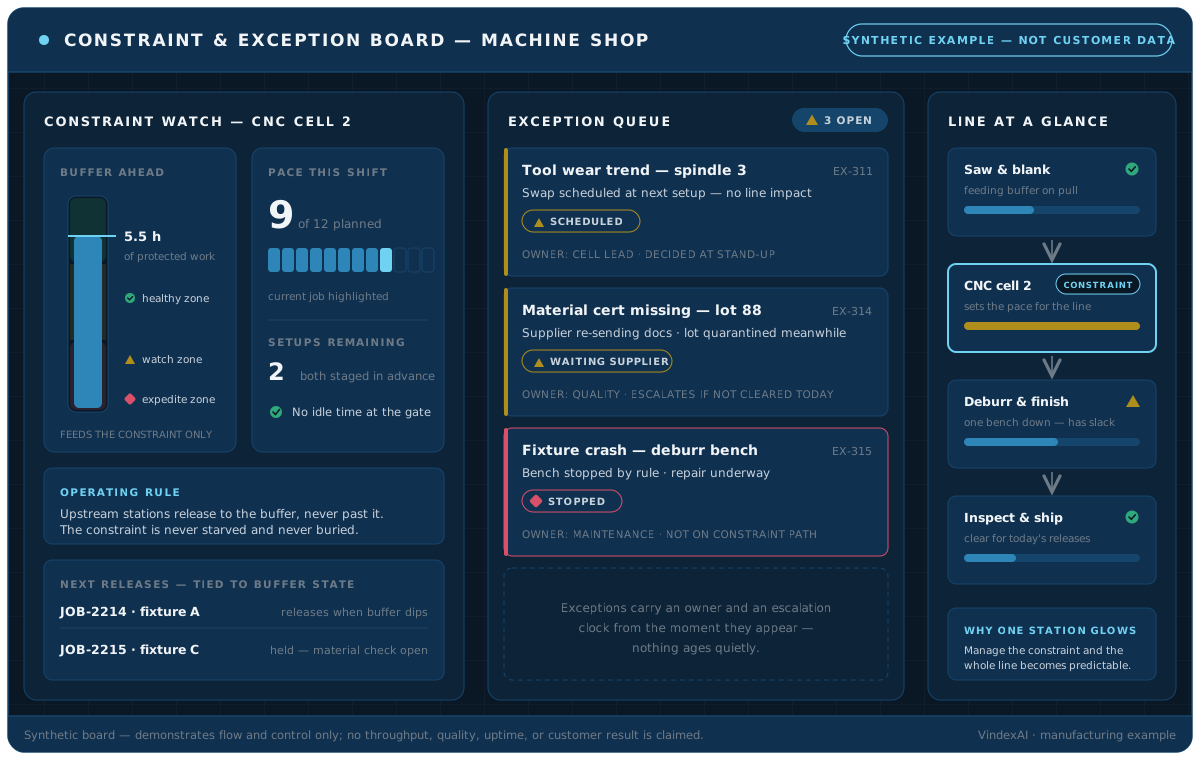
Constraint and exception board
Separate blocked work, shortages, holds, and decisions from routine activity so the responsible operator can act.
- Blocked work pulled out of the routine queue instead of buried inside it
- Shortages and holds carry the decision they are waiting on
- Exceptions routed to the operator authorized to clear them
Build-to-ship continuity
Carry completion state, required review evidence, shipment readiness, and customer commitment into one traceable flow.
- Review evidence attached to the build record rather than filed separately
- Customer commitment visible alongside shipment readiness, not tracked in a different system
How we serve the industry
Manufacturing controls, Buyer questions, and Proof boundary
Authority matters more than visibility on a factory floor. Who may release work, change sequence, or lift a hold is modelled explicitly.
Operating controls
Preserve release authority, change approval, source-system ownership, manual override, and escalation at each production boundary.
- Release authority and hold authority modelled as different powers, because on most floors they are
- Source systems keep ownership of their records; the board reads state rather than forking it
Buyer questions
Where does production state become stale, which constraint costs attention, and who is authorized to change sequence or release work?
- Stale state is treated as a finding in itself — it marks where the operation loses truth
- The answers scope a first board, not a plant-wide rollout
Proof boundary
A synthetic production board can demonstrate flow and control, but it does not claim throughput, quality, uptime, or customer results.
- No throughput or uptime figure is published without measured, customer-released evidence