

Solutions / Business operations
Build the operating workflow around the real work.
VindexAI maps the current state, responsible people, handoffs, decisions, and evidence before shaping software around the operation.
Solution focus
Work that can become a working system.
Software and managed workflows that reduce the effort required to run the business. This is the clearest expression of running the company's company.
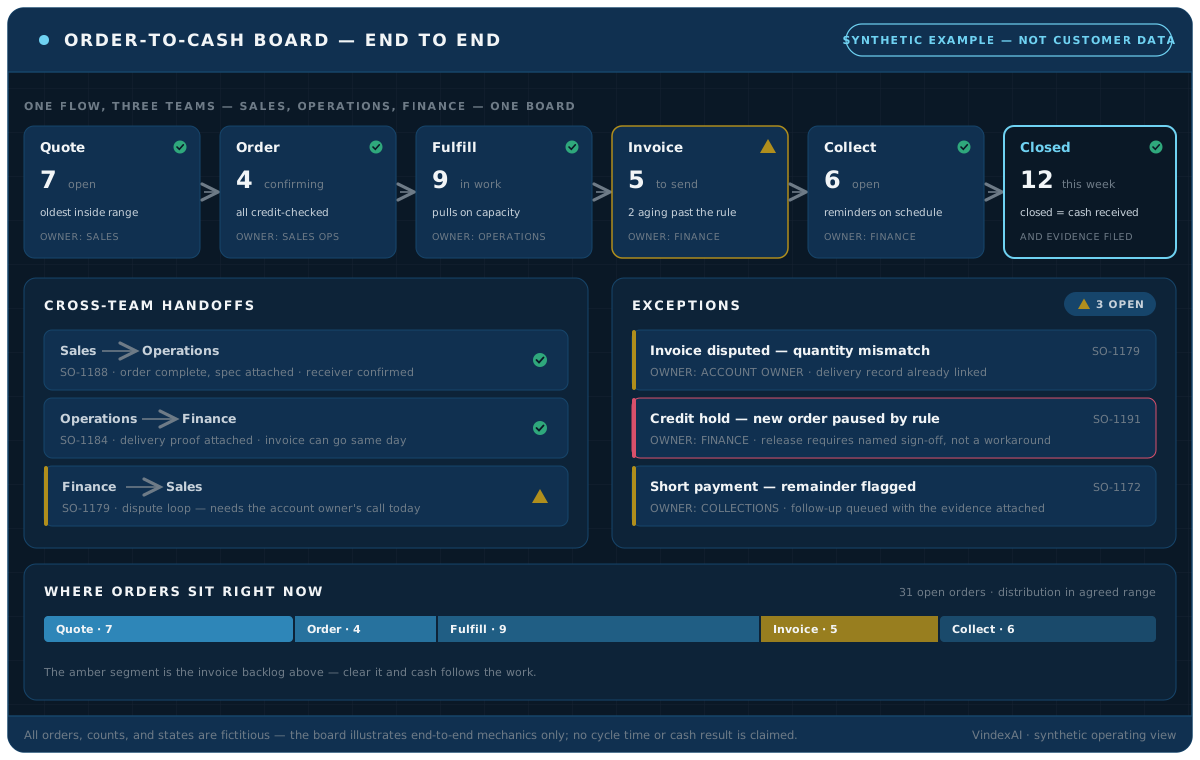
Lead to delivery
Connect lead handling, qualification, quoting, customer handoffs, delivery state, and follow-up without forcing every team into one generic sequence.
- Lead-to-quote, RFQ, and estimating flows that keep the estimate attached to the record it came from
- Purchase order, invoice, and remittance work moving as one connected sequence
- Customer, partner, and opportunity state kept current as the work happens rather than through re-entry
Recurring operations
Bring recurring reviews, approvals, exceptions, document work, and next actions into a controlled operating view.
- Project intake, handoffs, status, and closeout as a tracked sequence rather than a chain of reminders
- Bookkeeping and finance workflows with the supporting document attached to the entry
- Data intake, document processing, and business records handled where the operator already works
State and accountability
Make the current state, responsible person, material change, and required decision visible where the work is run.
- Cross-business-unit coordination without collapsing local workflows into one generic process
- Executive operating views that show what is true now and what is waiting on a decision
How we build it
Start with a bounded operating problem.
One workflow, one business unit, or the enterprise are scopes rather than packages. A customer can begin small and expand only after the first boundary proves useful.
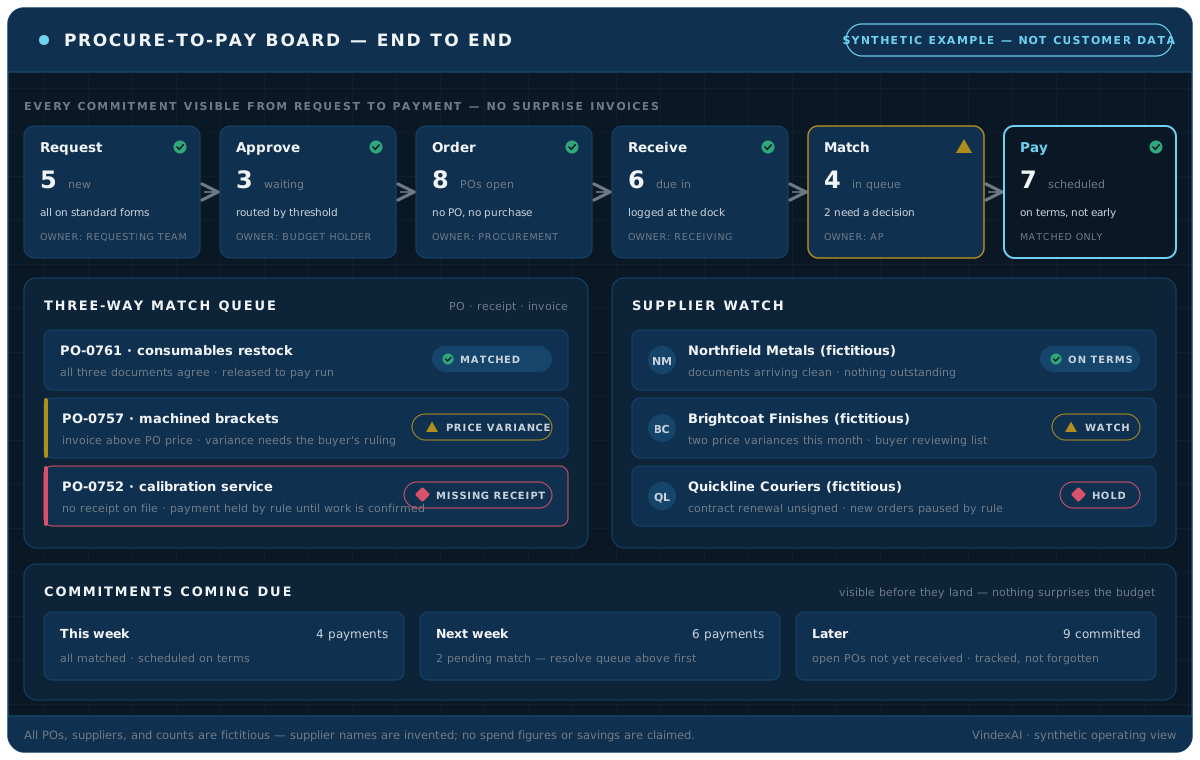
Map before building
Document the workflow, systems, data sources, authority boundaries, and proof requirements before selecting the implementation.
- Known routines, responsible people, and the systems already carrying the work
- State transitions, signals, decision rules, and the exceptions that break the happy path
- Interfaces and proof requirements, so evidence is designed in rather than added later
Prove before expanding
Begin with one workflow or business unit and expand only when the operating evidence supports the next boundary.
- A bounded first scope with a defined result, not an open-ended engagement
- Operating evidence reviewed before the next business unit is connected