Beyond RAG: Engineering True AI Memory
April 2026 · 8 min read
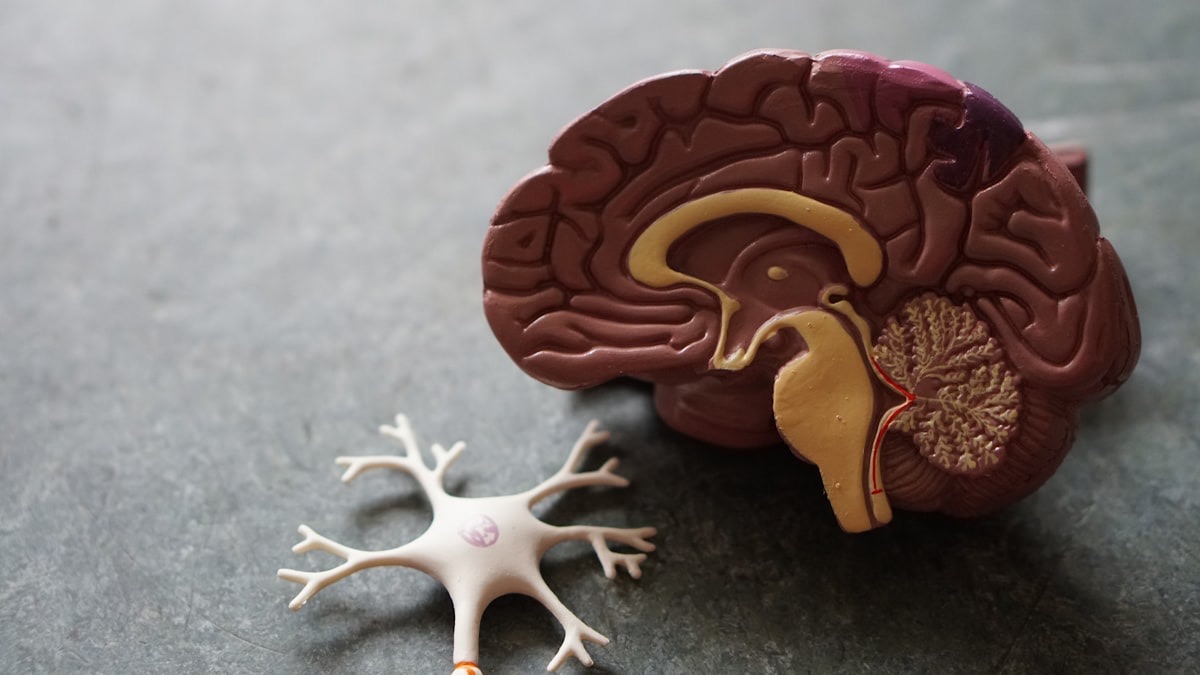
Most AI memory is a fancy search engine. Ours remembers like a disciplined operator.
Every AI company is talking about memory. Long context windows. RAG pipelines. Vector databases with billions of embeddings. The pitch is always the same: we store everything and retrieve what matters. In practice, the gap between “store everything” and “retrieve what matters” is where real systems break down.
We spent months building an AI orchestrator that runs six enterprises simultaneously for a single operator. Along the way, we discovered that the standard approach to AI memory — Retrieval-Augmented Generation — was fundamentally wrong for our use case. So we built something different.
The RAG Problem
RAG follows an elegant premise. Take your knowledge, chop it into chunks, convert those chunks into vector embeddings, store them in a vector database, and at query time run a similarity search to pull the most “relevant” chunks into the prompt. The LLM then generates a response grounded in retrieved context.
The problem is that similarity is not relevance. A vector embedding captures semantic proximity — words and concepts that appear in similar contexts. It does not capture operational priority. It cannot distinguish between a fact that was true six months ago and a fact that changed yesterday. It does not know that a credential was rotated, that a deal moved from “pending” to “closed,” or that a preference was explicitly overridden by the user.
RAG is probabilistic retrieval bolted onto deterministic execution. Every query is a roll of the dice. Sometimes the most relevant chunk surfaces. Sometimes a chunk from an outdated document beats it on cosine similarity. The system hallucinates relevance because it has no model for what “current” means.
For a chatbot answering general questions, this is tolerable. For an AI operating across six business domains where a stale credential means a broken pipeline and an outdated deal status means a wrong action — it is a non-starter.
What We Built Instead
We replaced RAG with a file-based persistent memory system organized into three explicit tiers. No embeddings. No vector database. No similarity search. Just structured files with clear ownership, freshness rules, and deterministic retrieval.
Short-term memory is the active conversation. It holds the current mission context, in-flight decisions, and intermediate results. It lives and dies with the session. Nothing persists here unless explicitly promoted.
Medium-term memory is the session archive. Over 26 timestamped session logs spanning 1,476 lines of operational history. Each log captures what was done, what changed, what decisions were made, and what is still pending. Cross-session patterns — recurring problems, emerging trends, behavioral adjustments — get extracted into topic files that persist independently of individual sessions.
Long-term memory is the institutional knowledge layer. Over 20 documents capturing operator preferences, enterprise state, infrastructure facts, proprietary IP references, active deal status, and contact registries. These files are the ground truth. They are updated deterministically — when a fact changes, the file changes. There is no semantic drift.
Memory Types with Purpose
Not all memories are equal. A user preference that says “never auto-send emails to customers” has different save triggers, recall triggers, and freshness rules than a project status update. We classify memory into four explicit types:
User Memory
Who the operator is. Communication preferences. Decision-making patterns. Triggered on explicit correction or stated preference. Always recalled. Never expires.
Feedback Memory
What to do and what not to do. Captured when the operator corrects behavior. Recalled whenever the triggering context appears. Overrides default behavior permanently.
Project Memory
Active state of ongoing work. Deal status, build progress, pending actions. Updated at end of every session that touches the project. Flagged stale after 7 days without update.
Reference Memory
Where to find things. File paths, API endpoints, credential locations, infrastructure topology. Updated when infrastructure changes. Verified before acting — dead references are caught, not followed.
The Deterministic Difference
The core architectural decision is determinism over probability. There are no embeddings. No vector similarity scores. No re-ranking models trying to guess which chunk is most relevant. The memory index — a structured markdown file with frontmatter metadata — is loaded at session start. Every time. All of it.
The index is capped at 200 lines with overflow management. When it grows past the cap, stale entries are archived and stable patterns are promoted to topic files. This is not garbage collection — it is editorial curation with explicit rules.
Retrieval is not a search. It is a read. This aligns with our broader memory architecture design. The system knows exactly where every fact
lives because the file structure is the index. If the operator’s preference about
email handling is in feedback_no_auto_customer_email.md,
that is where the system looks. No cosine similarity required.
Self-Correction Built In
Memory without maintenance decays. We built three self-correction mechanisms directly into the memory layer:
Stale detection. Any memory file untouched for more than seven days gets flagged in the operator’s daily briefing. Not deleted — flagged. The operator decides whether the information is still valid or needs updating. This prevents the silent rot that plagues RAG systems where outdated chunks keep surfacing because their embeddings still match.
Dead reference guard. Before acting on any file path, credential location, or infrastructure reference stored in memory, the system verifies the reference actually exists. If a memory says “the database is at /path/to/db” and that file is missing, the system does not silently proceed with a phantom reference. It logs the discrepancy and reports it.
Conflict resolution. When current state contradicts stored memory, current state wins. If the system reads a file and finds it differs from what memory claims, memory gets updated. The file system is the source of truth. Memory is a cache, not a database.
Cross-Enterprise Isolation
The system manages six enterprises simultaneously. An industrial services company. A manufacturing sales operation. An AI product studio. A sales methodology practice. A counseling practice. A holding company. Each enterprise has fundamentally different domain knowledge, different contacts, different active deals, different terminology.
Every enterprise operates inside a container with its own scoped memory. The industrial services container knows about invoices, crews, and equipment. The AI product container knows about Firebase deployments and version numbers. These memories never bleed across domains. A sub-agent spawned into the manufacturing container cannot read counseling practice credentials. A sub-agent in the AI container cannot write to the industrial services pipeline. Isolation is not a policy — it is enforced structurally.
Why File-Based
The industry assumes AI memory requires infrastructure. Pinecone. Weaviate. ChromaDB. pgvector. An embedding pipeline that converts text to vectors on every write. A similarity search engine that queries vectors on every read. A cloud service to host it all.
Our memory system is markdown files on disk. The total infrastructure cost for memory is zero — it runs on the same hardware that runs everything else. There is no database server to maintain. No embedding pipeline to monitor. No cloud dependency that can go down and take your memory with it.
Backup is a file copy. Sync between machines is rsync. Migration is copying a directory. Version history is git. Every tool in the Unix ecosystem works on these files natively. Try saying that about a Pinecone index.
The tradeoff is obvious: we sacrifice semantic search flexibility for operational reliability. We cannot ask “find everything related to this vague concept” with a single query. But we do not need to. The operator knows what they are asking for. The system knows where the answer lives. The retrieval path is a straight line, not a probability distribution.
The Takeaway
RAG is a general-purpose tool for general-purpose chatbots. If you are building an AI system that needs to answer questions about a static knowledge base, RAG works fine. But if you are building an AI that operates — that manages active state, tracks evolving facts, respects user preferences, and executes across isolated domains — you need memory that is deterministic, typed, scoped, and self-correcting.
We did not set out to replace RAG. We set out to build an AI system that could reliably operate six businesses without dropping a ball. RAG could not do that. So we built something that could.
See the Full Architecture
Read the technical case study on how this memory system powers a live multi-enterprise AI deployment — or talk to us about building one for your operation.