Your AI Is Only As Good As Your Data
April 2026 | 6 min read
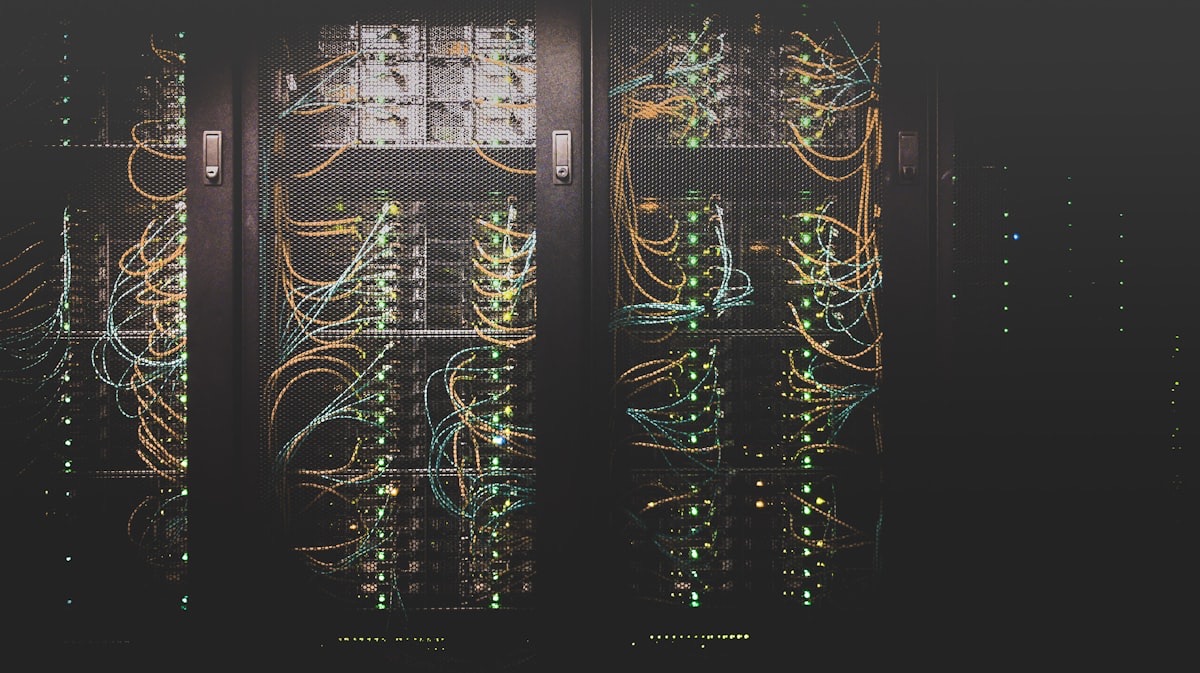
You can buy the best AI on the planet. Feed it dirty data and it will confidently give you wrong answers.
That is not a hypothetical. It is the default outcome for most small and mid-size operators who bolt AI onto their existing operations. The tool works perfectly. The answers are dead wrong. And nobody catches it until the damage is done — a bad invoice goes out, a duplicate record spawns a ghost customer, or a forecast built on contradictory data sends leadership in the wrong direction.
The problem was never the AI. The problem is what you fed it.
The Data Swamp
If you run a small operation, you already know this landscape. You have duplicate contacts scattered across five tools — your CRM, your email, your phone, a spreadsheet someone made in 2021, and a sticky note on the monitor. Your invoices do not match your purchase orders because they were entered by different people at different times using different naming conventions. Your CRM says one thing and the spreadsheet the sales team actually uses says another.
Email threads serve as your system of record. "Check the thread from August" is a real sentence spoken in real businesses every day. Financials live in a patchwork of QuickBooks, bank feeds, credit card statements, and the owner's memory. Ask three people in the company what revenue was last quarter and you get three different numbers.
This is the data swamp. Every small operator lives in it. Most have stopped noticing the smell.
Why This Kills AI Projects
AI is an amplifier. That is the core truth most vendors will not tell you. We built our entire platform around this principle. Clean data in, amplified intelligence out. Dirty data in, amplified garbage out. There is no middle ground. The model does not know your data is wrong. It has no way to know. It processes what it receives with absolute confidence and gives you an answer that looks authoritative, reads professionally, and is completely, structurally incorrect.
The industry has a statistic it does not like to advertise: the majority of enterprise AI projects fail to deliver meaningful ROI. Research from MIT, Gartner, and McKinsey all converge on the same root cause. It is not the models. It is not the compute. It is not the talent. It is the data.
The number one reason AI projects fail is not the AI. It is the data underneath it.
What SSOT Means in Practice
SSOT stands for Single Source of Truth. It is not a philosophy. It is an engineering constraint — one we detail in the Data Architecture case study. One database. One schema. One canonical version of every record. If it is not in the SSOT, it does not exist.
That means your customer record lives in one place. Your invoice lives in one place. Your project status, your financial position, your contact list — one place each. Not synced across five tools with a prayer that the sync ran correctly. One authoritative source that every downstream system reads from.
When you ask a question — "How much does this customer owe us?" or "What is our cash position?" — the answer comes from one place. Not a reconciliation. Not a best guess. One lookup, one answer, every time. That is what SSOT means in practice.
Our Approach: The 7-Step Intake Pipeline
Getting to SSOT requires a disciplined intake pipeline. Every record that enters the system — whether it comes from an email, an API, a manual entry, or a third-party feed — passes through seven gates before it touches the operational database.
Normalize
Clean formatting, standardize field names, enforce consistent data types. "LLC" and "L.L.C." become the same thing. Phone numbers get a single format. Dates stop being ambiguous.
Dedup
SHA-256 content hashing catches exact duplicates. Levenshtein fuzzy matching catches near-duplicates — "John Smith" at "ABC Corp" and "Jon Smith" at "ABC Corporation" get flagged and merged, not stacked.
Route
Keyword scoring and entity classification send each record to the correct processing queue. An invoice goes to finance. A support request goes to ops. No human triage required.
Q-Score
Every record gets scored on an Eisenhower matrix with financial weighting. Urgent + high-dollar items surface first. Low-priority noise sinks to the bottom. The system prioritizes what matters to the business, not what arrived most recently.
Persist
The cleaned, deduped, routed, scored record writes to the SSOT database. This is the only write path. No side doors. No manual overrides that bypass the pipeline.
Link
Cross-reference related records automatically. A PO links to its invoice. A contact links to their company, their deals, their communication history. No orphan records. No dead ends.
Archive
Every version of every record is preserved in an immutable audit trail. You can reconstruct the state of any record at any point in time. Compliance-ready, dispute-proof, and fully reversible.
The Results
When you run every inbound record through this pipeline, the numbers speak for themselves. Zero percent orphan rate — every record is linked to its parent entities. Zero percent duplicate rate — the combination of exact hashing and fuzzy matching eliminates both identical and near-identical records before they reach the database. And deterministic output — the same input produces the same result every single time, regardless of when it runs or who triggers it.
That is the foundation AI needs. Not perfect data — no dataset is perfect. But structurally sound data. Data with one canonical version, one schema, and one path in. When the AI reads from that foundation, its answers are grounded in reality. Not in the chaos of five contradicting spreadsheets.
The Bottom Line
The order of operations matters more than the technology you choose. This principle is at the heart of our methodology. Clean your data before you automate. Automate before you add AI. AI is the last layer, not the first.
Most operators try to do it backwards. They buy the AI tool, point it at their existing mess, and wonder why the outputs are unreliable. Then they blame the AI. The AI was never the problem.
If you are considering AI for your operation — whether that is automating back-office workflows, building customer-facing intelligence, or standing up predictive analytics — start with the data. Audit it. Clean it. Consolidate it into a single source of truth. Build the intake pipeline that keeps it clean. Then, and only then, let the AI loose on it. The results will be transformational. But only if the foundation is solid.
Ready to build on solid ground?
See how we architect SSOT systems for real operators — or talk to us about your data.